POST-EXTRACTIVE SUBLIME
A visual and critical exploration of contaminated ecologies and their unsettling beauty. This project moves through ports and salt flats, refineries and coastal plants, and looks at how toxicity shapes matter and perception alike. In these living environments, human and more-than-human lives entangle in unstable ways.
Miners carved the history of Masua and the Sulcis basin into soil and stone. What visitors now see as a dramatic coastline once pulsed with shafts and tramways. Engineers measured the ground and hollowed it out, turning geology into a living archive of extraction.
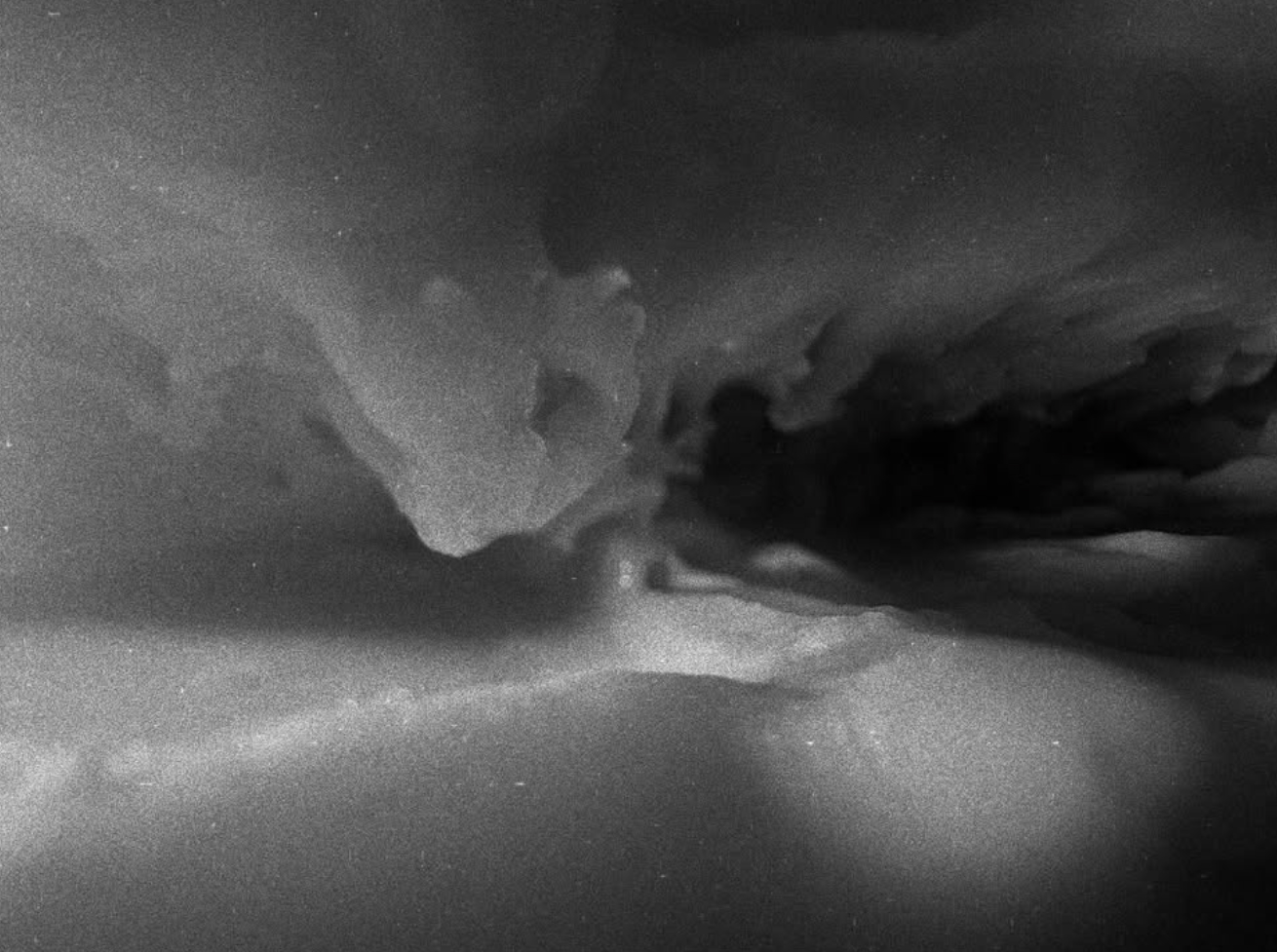
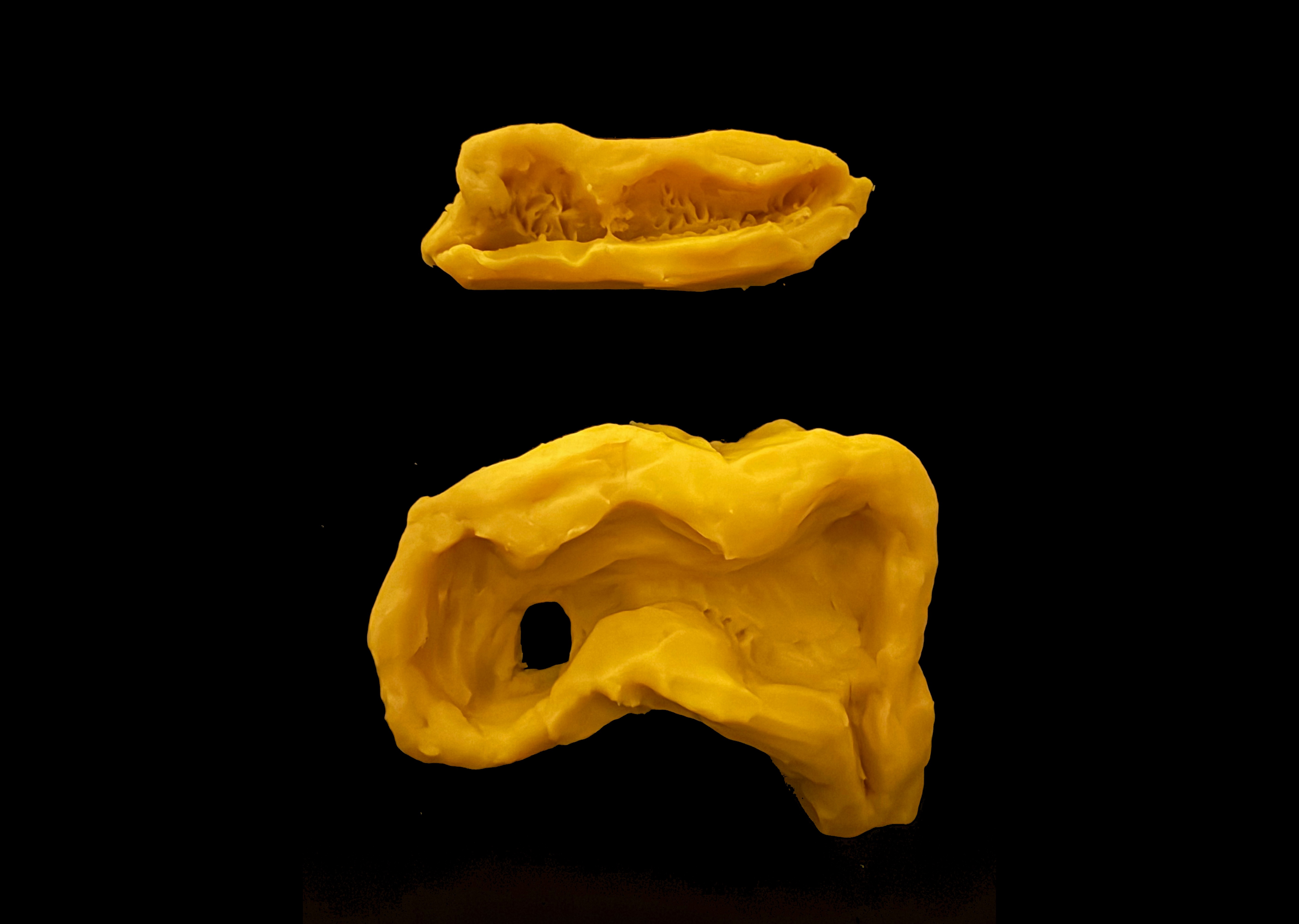
Masua Cave and Nebida Mine, Plaster, 2025

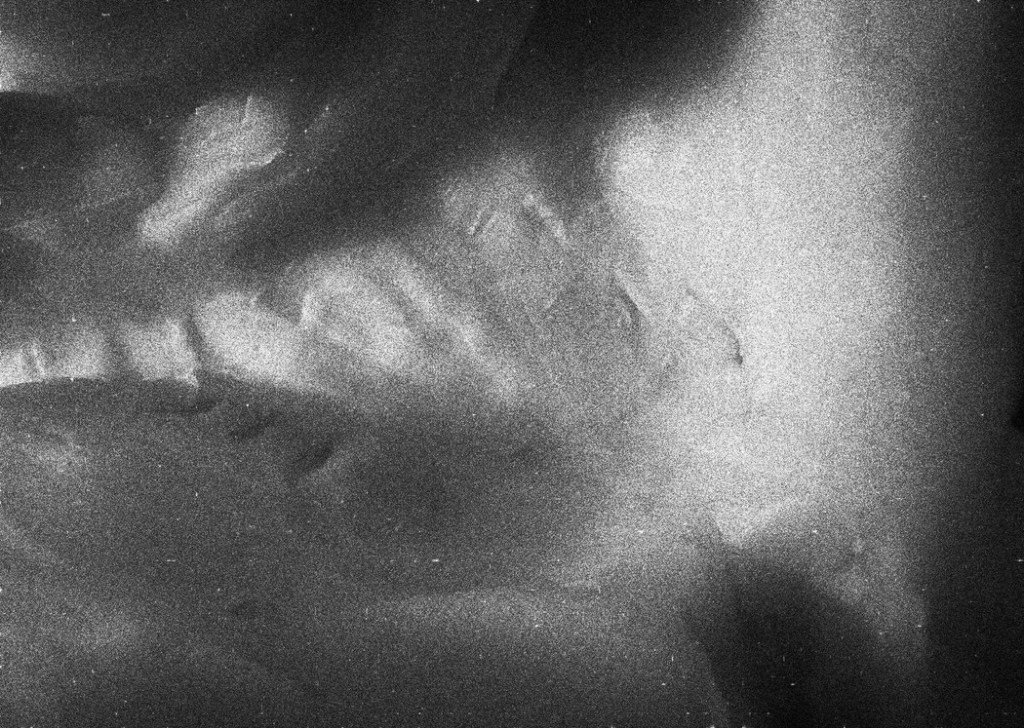
Along the coast, the same geometry returns. Salt workers once divided the marshes into shallow pans, where sun and wind drew salt from the sea. At Portovesme, industry later built basins of a similar shape to hold the red mud left by alumina processing.
In both, the water leaves and the matter stays. Salt crystallizes in the pans; in the industrial basins, metals and caustic residues settle and seep into the ground beneath them. The coast keeps both deposits, one harvested and the other left behind.
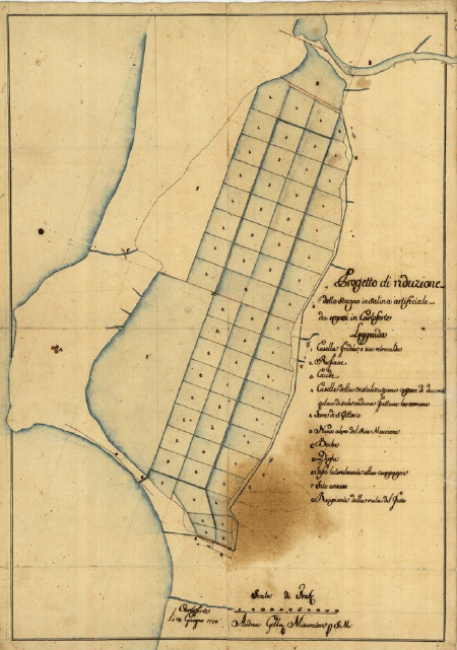
Andrea Golla, plan to turn the lagoon of Carloforte into an artificial salt works, 18 June 1770. Archivio di Stato di Cagliari
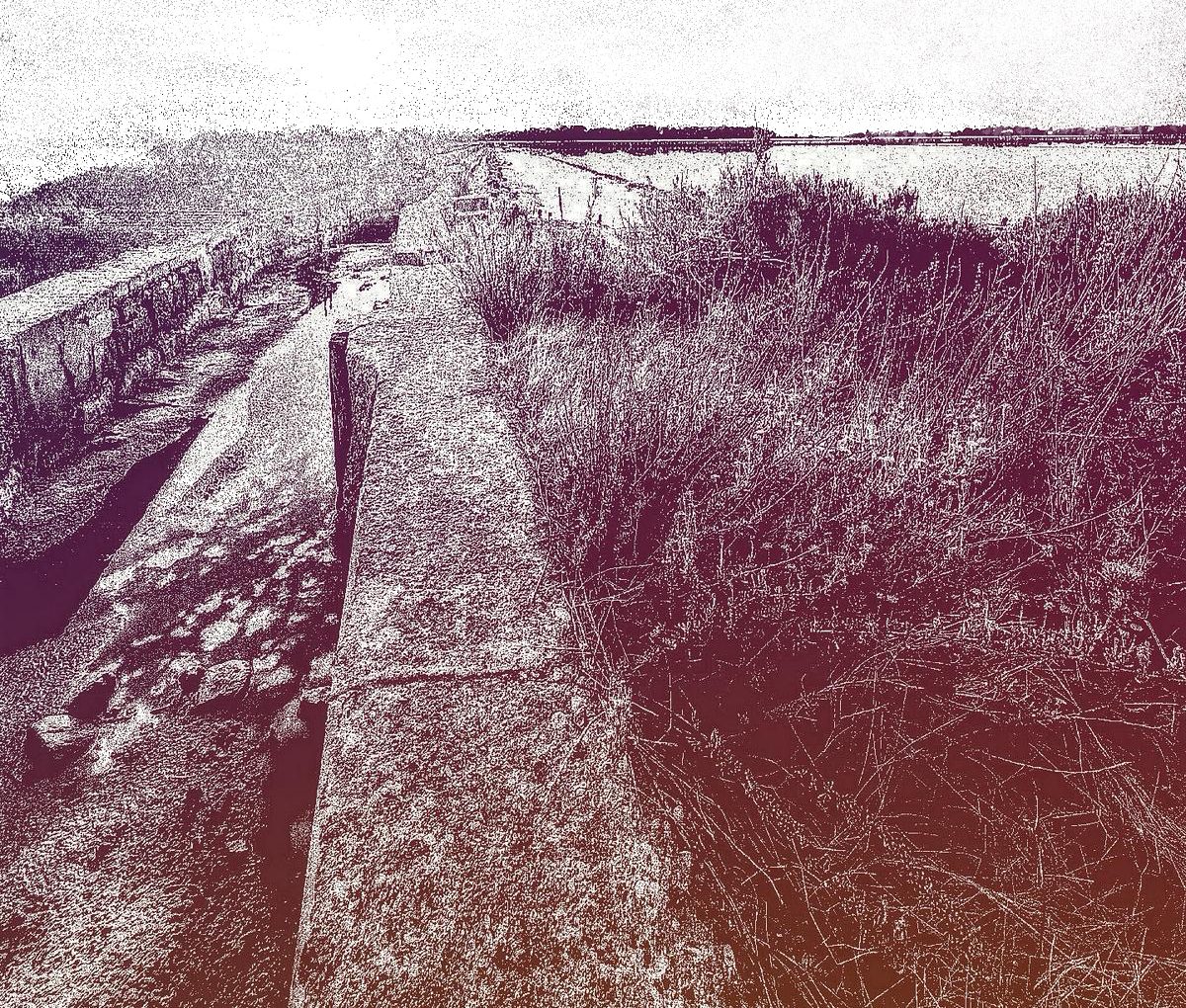
Photograph (post-produced), 2025

Speculative landscape, digital post-production of an AI-generated image, 2025

Industrial waste basins, Portovesme. Satellite image © Google, 2025

